
Argentina Builds a National Cryptographic Identity System


Argentina's new electronic national identity card is more than a redesigned secure document. It is the visible part of a larger national identity system linking physical document security, contactless chip technology and online verification services within one architecture.
The introduction of the physical card was initially covered in the ID & Secure Document News™ February 2026 edition. That article described a document protected by a range of security features along with a transparent window, a personalised serial number and laser-engraved data, providing protection against counterfeiting and alteration.
These features matter because identity fraud rarely attacks every part of a document at once. A counterfeiter usually concentrates on the portrait, name or date of birth.
Argentina's design makes that approach more difficult. The security background continues through the portrait area, which complicates localised changes. A clear layer protects the main portrait and key biographical details. Secondary images, including a changeable laser image and a ghost portrait in the window, allow an inspector to compare several representations of the same holder.
The card body uses multilayer polycarbonate. During manufacture, the layers are fused under heat and pressure. The result behaves more like a single block than a laminated card, with the personal data engraved inside the structure rather than printed on the surface. Attempts to separate or replace layers would leave permanent, visible damage.
The visual design also uses familiar national imagery as a security tool. The Sol de Mayo (the Sun of May – one of Argentina's national symbols) combines a transparent diffractive optical device with fine line structures. These structures include guilloches and line width modulation whose thickness changes subtly across the image creating depth for the eye and complexity for any scanner that attempts to capture the image.
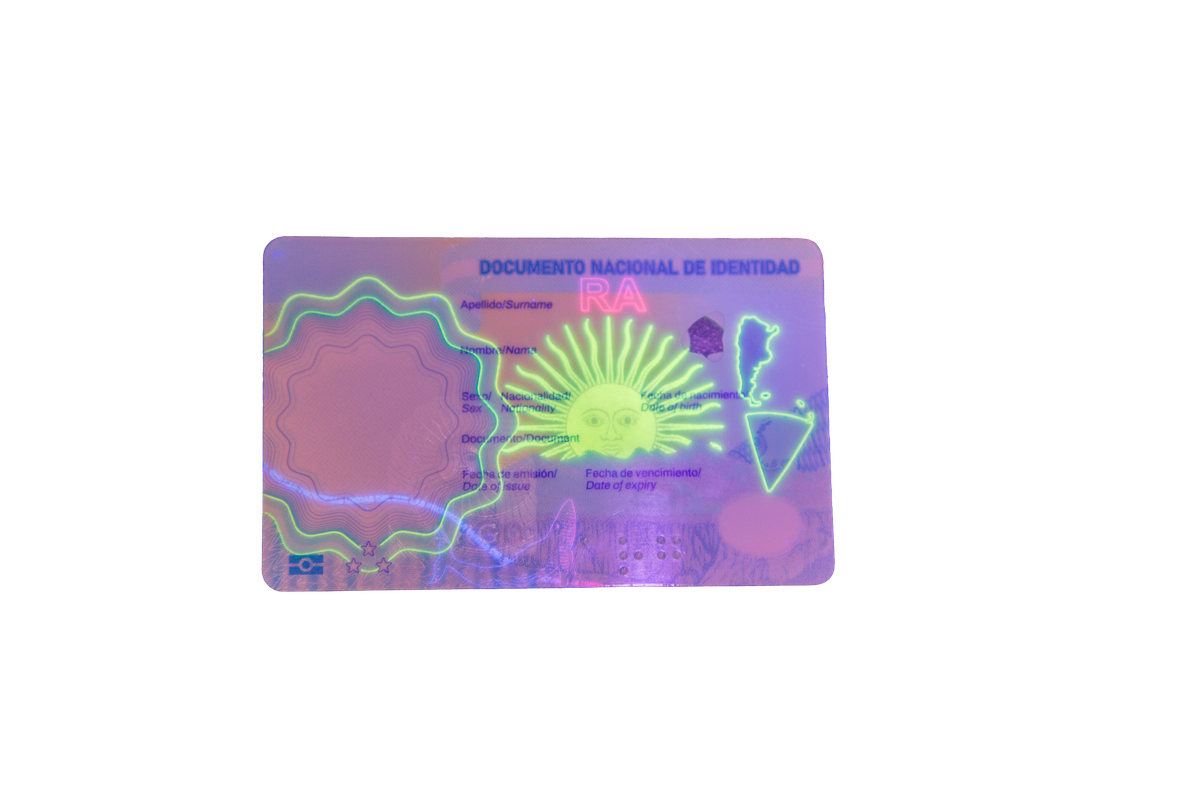
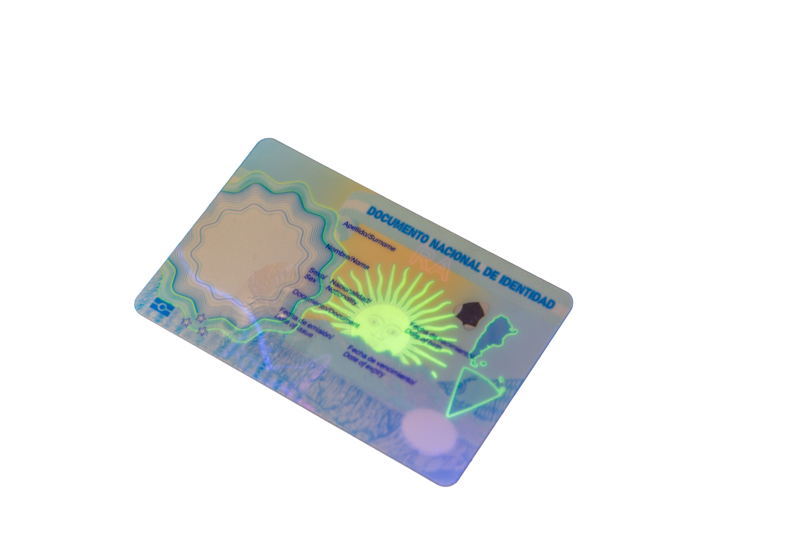
As Viktoria Simpraga of Mühlbauer ID Services (one of the card's technology providers) points out, the new card is distinguished not by any single security feature, but by the carefully engineered security concept behind it, where multiple technologies work together in complementary layers to provide robust protection against counterfeiting and fraud. Its design strikes a balance between innovation, security, usability, durability and the thoughtful integration of national identity, creating a document that is both visually distinctive and highly resilient throughout its entire lifecycle.
Securing the digital infrastructure
An equally important, but less visible, part of the project is an encrypted contactless chip that sits inside the card. The data on the chip can be read by a reader or, at close range, by an NFC-enabled smartphone. The aim is to read the stored data and determine whether that data was signed by the issuing authority and whether it has been changed.
This illustrates the main difference between checking, say, a visible image and checking cryptographic evidence. Optical character recognition can extract a name or document number from a portrait photo, but it cannot prove that the photograph came from a genuine card.
A digital signature works differently. Here, the issuing authority creates a signature using a protected private key and a verifier checks that signature using the corresponding public certificate. Any unauthorised change to the signed data causes the check to fail.
In person, the holder can present the card for visual inspection and chip authentication. Online, the same credential can support a remote transaction through NFC and government or commercially controlled portals.
This creates a wider scope for the card. Banks can use it during account opening, health services can verify a patient, universities can authenticate a student. In each case, the relying organisation would seek a cryptographically supported result instead of trusting a card image.
RENAPER leads the programme, with technical implementation by a consortium comprising Mühlbauer ID Services and Unitec Blue.
The project also introduced decentralised full-colour card personalisation capacity, delivering the first 60,000 cards within 45 days of design approval, with total issuance already reaching 7.2 million cards. In total there are six big volume personalisation machines (SCP2000) operating at RENAPER's Buenos Aires central site, and another 11 decentralised (SCP60) machines.
The programme reflects a wider shift in identity document design. Argentina's electronic ID card places the physical credential at the centre of the national identity system. It can be checked face to face, but it can also support cryptographic validation through government and commercial portals. This gives the document a continuing role in both physical and remote identity transactions, while supporting both machine authentication and manual inspection.
Get the IDN Weekly News delivered free to your inbox.