
Nano-Engineered Optics for Passport and ID Card Protection

Counterfeiters are no longer limited to simple print and overlay methods to make counterfeit security features. High-resolution imaging, better foils, and wider access to precision tooling mean that many familiar ‘tilt effects’ can be imitated well enough to pass quick, first-line checks – especially on identity cards and passport datapages where the attack is aimed at the portrait and personal data.
At the same time, issuers are pushing personalisation deeper into the document substrate, using tougher constructions such as polycarbonate datapages and laser engraving to make alteration and data substitution harder in the first place.
Against that backdrop, optical security needs to do more than look attractive, it has to deliver a clear means of authentication while being intrinsically difficult to analyse and reproduce.
These are the issues that IQ Structures is addressing with its nanoDOVID® technology.
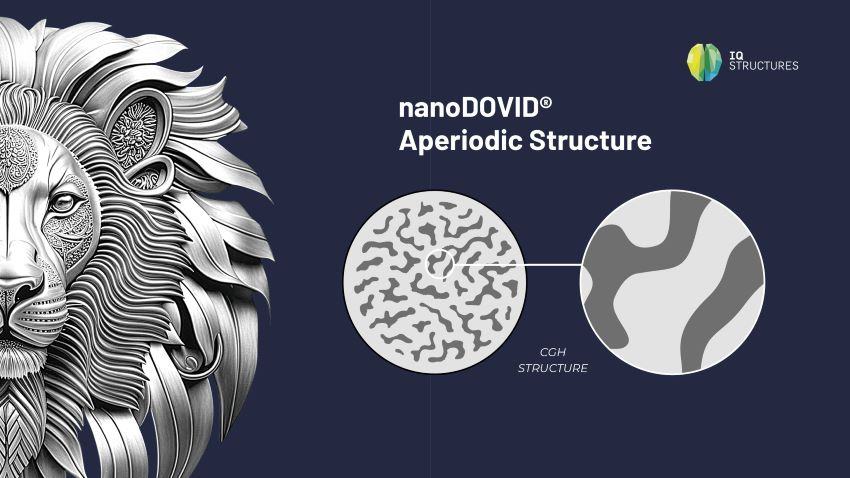
Instead of treating an optical feature as a designed pattern that repeats, the company’s approach is to engineer the way light interacts with a surface at very small scale, using computer-calculated structures that do not rely on simple repetition.
In plain terms, the feature is not just ‘an image on a foil’, it is a finely made surface that forces light to change in controlled ways as the document is tilted. Because the structure is aperiodic it does not have a simple repeating unit. The ‘tiles’ that build the structure of the pattern keep changing, so there is no single pattern a counterfeiter could copy and repeat across the entirety of the feature. A counterfeiter would have to recreate the exact tiny shapes across the complete surface to generate the effect.
For identity documents, the benefits are clear. The most valuable target for forgery is the personal data zone – portrait, name, date of birth, document number – because altering those elements turns a stolen or fabricated credential into something usable. A nano-structured optical layer can be placed so it protects these areas. Attempts to abrade, peel, re-laminate, or patch over the surface risk damaging the optical behaviour in a way that is obvious to an inspector.
There is also a wider shift underway in how secure documents are authenticated. As the Optical & Digital Document Security™ conference underlined (Warsaw, 15-17 September 2025), optical security features are increasingly being designed with both human inspection and machine checking in mind, including the growing use of smartphones.
IQ Structures positions nanoDOVID as a technology designed specifically to bridge overt and digital authentication.
Because its nano-engineered structures are algorithmically calculated rather than built from simple repeating patterns, a single element can combine visually striking imagery with more controlled responses intended for device-assisted inspection.
To find out more visit www.iqstructures.com
Get the IDN Weekly News delivered free to your inbox.