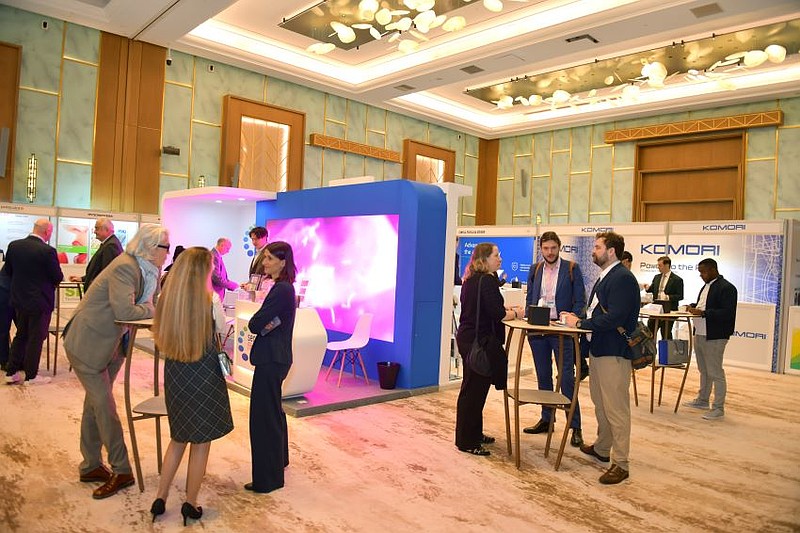
In February, the 22nd edition of the High Security Printing™ (HSP) EMEA conference took place in Rabat, Morocco, marking the event’s first appearance on the African continent. Attendance was recorded at 341 delegates representing 146 organisations across 49 countries, with an increased proportion of government agencies and central bank delegations.
The two-track conference programme ran currency sessions in parallel with an identity track, where practical aspects of design, issuance and verification featured prominently.
The pre-conference identity seminar (hosted by Entrust and Keesing Technologies) was framed around the connections between issuer, manufacturer and verifier.
The workshop looked at how the security value of a credential depends not only on how well the features are selected, but on how reliably the issuer controls enrolment and personalisation, how well manufacturing tolerances preserve intended optical and tactile behaviours, and what document inspectors can realistically examine under operational time pressure and variable lighting.
The workshop used case studies spanning physical fraud (forgery/alteration) and digital/hybrid fraud (credential theft, deepfakes, remote presentation attacks), reflecting the current trend for attackers to focus their attention towards on-screen and remote onboarding.
The identity programme opened with reports on developments in travel and identity documents, including the use of colour as a deliberate security variable (not simply to attract attention), positioned as a tool for rapid first-line differentiation and anomaly detection. This was complemented by enforcement-driven observations on counterfeit driving licences, reinforcing a key design principle that counterfeiters aim to spoof what is actually checked and not the complete document as presented.
A clear theme across multiple sessions was that coherence in design is of itself part of the security strategy. Rather than presenting features as discrete add-ons, speakers emphasised integrated systems in which artwork, substrate choices, portrait strategy and optical layers support a consistent approach to authentication. This aligns with the broader EMEA shift towards documents that remain explainable at Level 1 (human inspection) while still providing robust machine and forensic protection.
An interesting case example of this came from Georgia. Developed by Veridos in collaboration with the Public Service Development Agency (Ministry of Justice) and designer Nino (Nitta) Gongadze, the Georgian programme aligns six passport types and four identity cards across materials, features, and visuals.
Technical discussions further addressed the design methods being adopted to maintain legibility when issuers move from PVC/composite cards to PC with laser personalisation and window features.
The identity track also included a collaborative sample ePassport presented by ANY Security Printing and partners (including SICPA, IQ Structures, BP Security, Hueck Folien and ANY SecLab), highlighting how coherent artwork and page planning can support an integrated security architecture.
The final identity session focused on the physical-digital interface. It covered hybrid instruments, production/inspection data, and smartphone-based authentication. While the specific approaches differed (eg. dynamic micro-optics, luminescent/taggant systems, traceability platforms), they all targeted the same outcome: combining physical and digital document inspection for more reliable verification.
The industry awards ceremony took place during the gala dinner at Palais Jawhara in Rabat. For identity, the categories and winners were: Best New National ID Card (Estonia), Best New Passport (Liechtenstein), Best New Document Series (Georgia), Best New Driving Licence (Netherlands Vehicle Authority, RDW), and Best New House Passport (ANY Security Printing). For further coverage of the awards, see IDN February 2026.
The conference’s traditional football match, sponsored by Zeiser, offered a relaxed and lively end to the week’s discussions.
With this historic African debut now concluded, Reconnaissance looks ahead to the rest of the 2026 global series: HSP Latin America in Guatemala this June and HSP Asia in Hong Kong this December. And next year, HSP EMEA will take place in Vienna, Austria, in early March.